

Why Your Kid’s Tantrum Might Be a Good Thing
June 15, 2025
Let’s be honest: no parent enjoys a tantrum. The wailing, the flailing, and the dramatic collapse to the floor over the “wrong” color cup – exhausting. But what if I told you those meltdowns are actually signs that your child is growing in all the right ways?

Yes, tantrums are loud, chaotic, and sometimes public. But believe it or not, that drama is development in action. Because beneath the noise lies something beautiful: a child’s brain learning to manage big emotions in a very small body.
Here’s why the next dramatic meltdown could be even beneficial for your little one:
They’re learning emotional expression
Children don’t come preloaded with emotional vocabulary. Tantrums are often the only way they know how to express, “I’m overwhelmed,” “I’m tired,” or “That red spoon was my entire world five minutes ago.” While it may sound like chaos, it’s communication in its rawest form. And in the long run, that emotional “noise” is doing important work. It provides children with the opportunity to process emotions and then reset. When kids are allowed to demonstrate strong feelings, they release emotional tension that might otherwise build up and show itself in sneakier ways, like aggression, or daily battles over brushing teeth or getting dressed. So, one big blow-up now can mean fewer tiny battles later.
Tantrums show trust
It may sound backward, but kids often lose control around the people they feel safest with. If your kid goes full meltdown mode only around you, take it as a very loud compliment. It means they trust you completely. They know they’re still loved, even when their emotions are messy. So, when your kids express themselves fully around you, congratulations – you are their emotional safe zone.
They’re building self-regulation skills
A tantrum isn’t just noise – it’s a training session. Right now, your child doesn’t know how to manage that tidal wave of emotion, so they scream. You, staying calm in that chaos, with your patience, willpower, and wisdom, will become a role model for them. This is emotional coaching. The more centered you remain, the safer your child feels, and the more they learn that big feelings can be weathered without losing love or connection. Over time, kids start to connect their emotions to actions and learn how to manage both. And your calm presence during the storm teaches them how to find their own calm one day.
They invite you to grow, too
Let’s not pretend parents are emotional superheroes. Tantrums push our buttons, test our patience – but they also offer a chance for connection. They teach us to stay present, to listen beyond the screaming, and to model the emotional regulation we hope our kids will learn. In other words, tantrums shape parents just as much as they shape kids. And here’s the unexpected magic: those small moments of comfort – your calm voice, a gentle hug, or simply saying, “I’m here” – help your child understand that love isn’t conditional. That they’re accepted not just when they’re cheerful, but also when they’re angry, sad, or “being difficult.” This builds closeness and trust. They become more attached to you, and you, in turn, feel more deeply connected to them.
It means they care
No one throws a tantrum over things they don’t care about. That’s how you know they’re engaged with the world around them. Strong feelings lead to strong connections – and that’s something to be grateful for, even when it comes in the form of tears in aisle 4. Just imagine a full-on meltdown over not getting the sparkly unicorn cereal. But it’s not just about sugar – it’s about joy, imagination, and a child’s deep emotional investment in what matters to them. They are showing you what they love, what excites them, and how deeply they feel, even if it’s inconvenient and extremely loud.
“No” as part of love
Let’s face it – many tantrums start with a simple, firm “no.” No more screen time. No ice cream before dinner. No, we can’t adopt that random stray cat. And suddenly… chaos. But here’s the thing: saying no is part of loving our kids. Boundaries help them feel safe, even when they don’t like the limits. More importantly, we need to say no calmly – and explain why. That’s how we’re helping them build emotional resilience. A child might not understand the logic in the moment, but over time, they will learn that “no” doesn’t mean “I don’t love you.” Quite the opposite. When you set a limit with empathy, explain your reasons, and support them through the frustration, you’re giving them one of the greatest emotional gifts: the ability to handle disappointment and still feel secure.
So… when, if not now?
As children grow, tantrums naturally become less frequent. Their brains mature, their vocabulary expands, and social norms begin to shape how they express emotions. Some of that is healthy development, but some of it is pressure to “behave,” to hold it in, to smile when they feel like screaming. Let’s be honest: many adults might feel better if they could have a well-timed tantrum instead of suppressing the anger. So, if a little one is still young enough to release all that emotion in the middle of the kitchen floor (or the grocery aisle), maybe we should let them do it. Maybe we even honor it.
Yes, it’s loud. Yes, it’s messy. But it’s real – and right now, it’s allowed.
Living in a Loop: The Cartoon Groundhog Day
July 5, 2025
There are things that we, as parents, will never forget. The first step. The first smile. The first “why.” And… the 101st time when you’re watching the same cartoon and start singing the lead character’s lines just because Elsa’s voice in your head is now stronger than your own inner voice.
Repeatland: Where Every Day is “Frozen”
Every parent has their own “dark” personal animated Groundhog Day. For some, it was Peppa Pig, for others - Frozen, and in our family… it was
Scooby-Doo.
When my daughter was little, she adored this character. We watched everything ever made about this cowardly dog: series, movies, cartoons, specials, old versions, new versions, and even versions that were scary enough for adults, but my daughter still laughs...
Yes, there were endless episodes! But the plot? Always the same: someone gets scared, everyone screams, “Oh no, it’s a ghost!” Then they run around, pull off a mask, and what a surprise, “It was the janitor all along!”
Every. Single. Time.
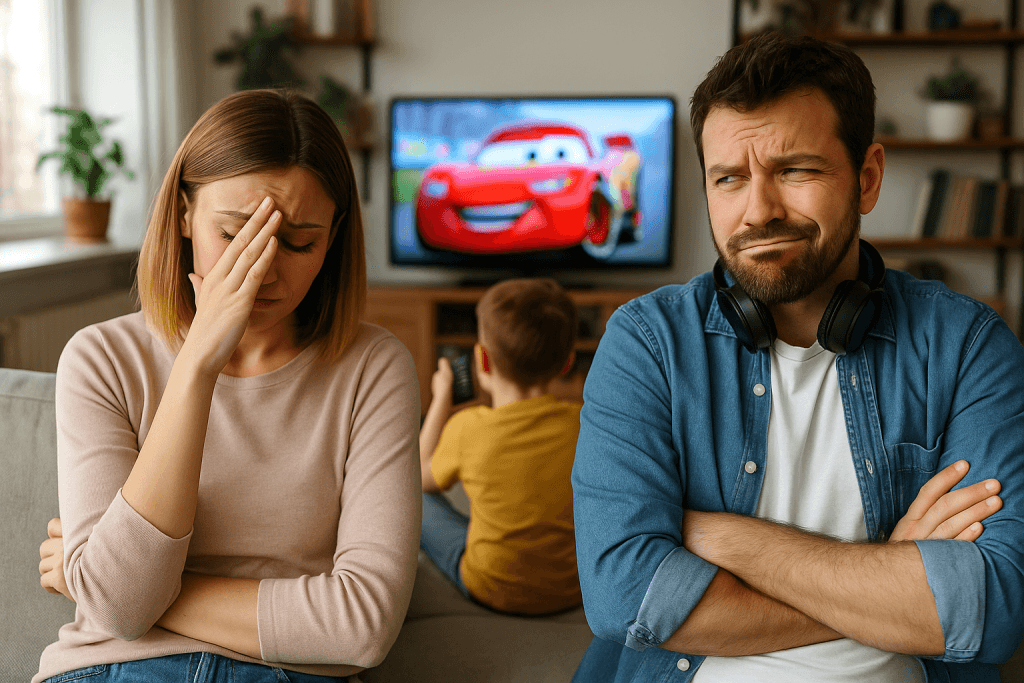
This went on for years… until our second child arrived. New passion. New obsession. And it came in the form of... Cars. But this time, there was just one animated movie. One character. One endless marathon.
We watched Cars several times a day, like we had a contract with Disney and would be fined for skipping even once. At this point, even Scooby-Doo felt like a breath of fresh air. And then, like a ray of hope in our parenthood, Disney released Cars 2. It was glorious. We finally had two movies now. Yay! What a variety! Contrast! Plot development! We almost cried from joy.
But “Ka-chow!” echoed through the living room again. And again. Like a tire screeching directly into our souls.
Endless replays are the source of parents’ insanity.
Psychologists say kids find deep joy in those endless replays. It gives them comfort, knowing that Elsa will once again build her ice castle, Paw Patrol will rescue someone with Hollywood-level drama, and Lightning McQueen will say “Ka-chow!” and win the race on the final lap. It is familiar, predictable, and joyful for them.
Children rewatch their favorites because they are learning the words, memorizing the movements, and soaking in every detail. They love feeling like little experts - quoting lines, predicting scenes, and proudly announcing what’s about to happen in a second. Replays aren’t boring to them - they are a joy. A celebration of everything familiar and fun.
And you? In that moment, you feel like you’ve been sucked into a time loop. You could work for Disney’s quality control team now, knowing where the animation has editing mistakes. And you absolutely hate that bunny from Zootopia, even if she is “so adorable.”
The Five Stages of Animated Acceptance
“Oh, what a cute cartoon!”                                                                                                                                   You are getting hooked, too. Great animation, adult jokes, catchy tunes. The child is happy, and you feel like you are the dream family.

“Didn’t we just watch this? Maybe we could watch something new?”                                                                               Your child looks at you as if you have just eaten their favorite teddy bear.

“Fine... but this is definitely the last time!”                                                                                                       Do you really believe it? Naive.

“Okay, go turn it on.”                                                                                                                                        You surrender without resistance. But inside, you are crying.

“Oh no, not this song again...”                                                                                                                                       And you are cleaning in the kitchen to Let It Go, knowing exactly when Elsa is about to do her dramatic hand-fling.
How to survive?
Change the language settings.                                                                                                                   Let the child watch in French, for example. Maybe they’ll learn “bonjour,” and you at least will stop hearing the original.

Put on wireless headphones.                                                                                                                  With noise cancellation and your favorite podcast. Pretend that everything is fine. This "emotional evacuation" method is approved by many parents.

Hide the remote control.                                                                                                                  “Accidentally.” Then help your child search for it with your best detective face.

See it as mental resilience training.                                                                                                              If you can survive 101 replays of identical episodes, you can be entrusted with negotiating for the United Nations.

But most importantly, remember that in this case, it’s okay to hate what your kids love - especially when it’s on a loop. Their joy is what keeps you from throwing the remote out the window or canceling your Netflix subscription.
Now, heart to heart
One day, you will miss it.                                                                                                                              When they are older and watching their own teen dramas, you will want to revisit The Lion King - just to remember how they sang “Hakuna Matataaa!” with their whole soul but missing every note.                                                                                                                                                                So, when your little one asks to watch it “just one more time,” take a deep breath... and get ready to live it all again.
Because this isn’t just about cartoons. It’s about how a little person finds their first passion. How their eyes light up at a familiar scene. How they laugh at the same spot, every time. How they sing along like it’s a Broadway show.

And at that moment...

You press play with a smile. You sing. You watch. And you become a part of their world.